
An uneven skin tone—characterized by dark patches, redness, or dullness—is one of the most common skin concerns. The good news? With the right approach, you can achieve a more uniform, radiant complexion.
What Causes Uneven Skin Tone?
Several factors contribute to an uneven complexion:
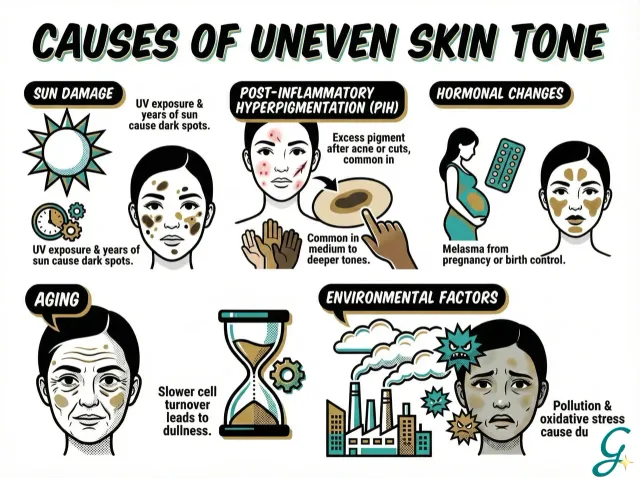
Sun Damage
UV exposure triggers melanin production, causing dark spots and patches. Years of sun exposure accumulate, making uneven tone more pronounced with age.
Post-Inflammatory Hyperpigmentation (PIH)
After acne, cuts, or inflammation, skin often produces excess pigment during healing. This is especially common in medium to deep skin tones.
Hormonal Changes
Melasma—patches of darker skin—often appears during pregnancy, with birth control use, or due to hormonal fluctuations.
Aging
Cell turnover slows with age, leading to dull skin and accumulated sun damage becoming more visible.
Environmental Factors
Pollution and free radicals contribute to oxidative stress, causing dullness and uneven pigmentation.
How to Even Skin Tone: A Complete Guide
Step 1: Sun Protection (Non-Negotiable)
No brightening routine works without sun protection. UV exposure darkens existing pigmentation and creates new spots.
Daily requirements:
- SPF 30+ broad-spectrum sunscreen
- Reapply every 2 hours when outdoors
- Wear hats and seek shade
- Don't skip on cloudy days
Step 2: Gentle Exfoliation
Regular exfoliation removes dead skin cells that contribute to dullness and uneven texture.
Chemical exfoliants for even tone:
- Glycolic acid — Brightens and smooths
- Lactic acid — Gentler, hydrating
- Mandelic acid — Best for sensitive/darker skin tones
Frequency: 2-3 times per week, not daily
Step 3: Brightening Ingredients
Target pigmentation with proven ingredients:
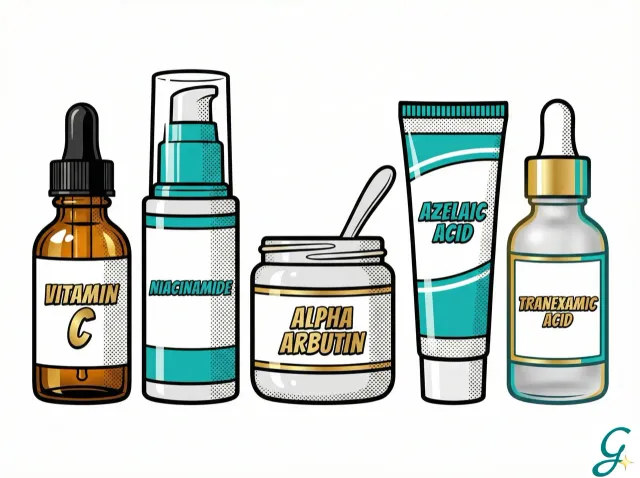
Vitamin C
The gold standard for brightening. Inhibits melanin production and provides antioxidant protection.
- Use 10-20% L-ascorbic acid
- Apply in the morning before sunscreen
- Store properly (dark, cool place)
Niacinamide
Vitamin B3 reduces melanin transfer to skin cells and strengthens the barrier.
- Use 5-10% concentration
- Gentle enough for daily use
- Works well with most ingredients
Alpha Arbutin
A gentle tyrosinase inhibitor that fades dark spots without irritation.
- Safe for all skin tones
- Use morning or night
- Pairs well with vitamin C
Azelaic Acid
Reduces melanin production with anti-inflammatory benefits.
- Great for acne-prone skin
- Safe during pregnancy
- Helps with redness too
Tranexamic Acid
Highly effective for melasma and stubborn pigmentation.
- Newer ingredient with strong research
- Can be used with other brighteners
- Available in serums and oral form
Building an Even Skin Tone Routine
Morning Routine
- Gentle cleanser — Don't strip your skin
- Vitamin C serum — Brightening + protection
- Moisturizer — Hydrated skin looks more radiant
- Sunscreen SPF 30+ — Essential for results
Evening Routine
- Double cleanse — Remove sunscreen thoroughly
- Exfoliant (2-3x/week) — AHA for surface renewal
- Treatment serum — Niacinamide, arbutin, or tranexamic acid
- Retinol (alternate nights) — Cell turnover
- Moisturizer — Support barrier function
Weekly Boost
- Brightening mask once a week
- Gentle at-home peel (if tolerated)
Lifestyle Changes for Better Skin Tone
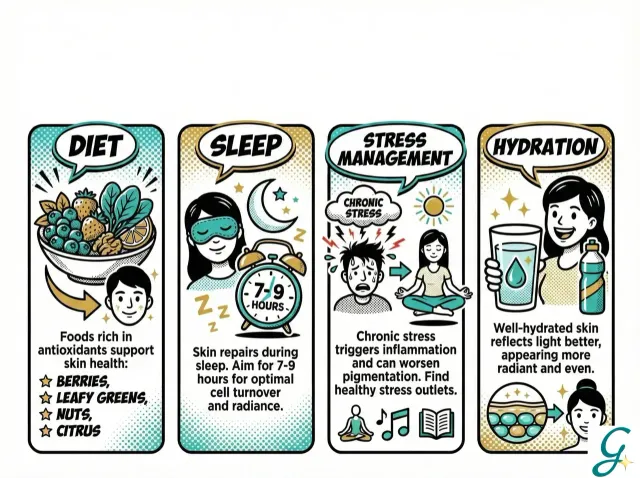
Diet
Foods rich in antioxidants support skin health:
- Berries, citrus fruits (vitamin C)
- Leafy greens (antioxidants)
- Fatty fish (omega-3s)
- Green tea (polyphenols)
Sleep
Skin repairs during sleep. Aim for 7-9 hours for optimal cell turnover and radiance.
Stress Management
Chronic stress triggers inflammation and can worsen pigmentation. Find healthy stress outlets.
Hydration
Well-hydrated skin reflects light better, appearing more radiant and even.
Professional Treatments for Uneven Skin Tone
When at-home products aren't enough:
Chemical Peels
Professional-strength exfoliation for faster results. Options include glycolic, TCA, and combination peels.
Laser Treatments
Target pigmentation precisely. Requires specialized settings for darker skin tones.
IPL (Intense Pulsed Light)
Treats sun damage and redness. Multiple sessions typically needed.
Microneedling
Stimulates collagen and enhances product absorption. Can improve overall skin quality.
Important: Always consult a dermatologist experienced with your skin tone before pursuing professional treatments.
Common Mistakes When Evening Skin Tone
1. Skipping Sunscreen
The biggest mistake. All brightening efforts are wasted without sun protection.
2. Expecting Quick Results
Pigmentation takes months to fade. Be patient and consistent.
3. Over-Exfoliating
Too much exfoliation causes inflammation, which leads to more pigmentation.
4. Using Too Many Actives
Layering multiple strong ingredients irritates skin. Introduce products slowly.
5. Ignoring the Neck and Chest
These areas show uneven tone too. Extend your routine below your jawline.
Timeline for Results
With consistent treatment:
- 2-4 weeks: Improved radiance and glow
- 6-8 weeks: Visible fading of surface pigmentation
- 3-6 months: Significant improvement in deeper pigmentation
- Ongoing: Maintenance to prevent new spots
Frequently Asked Questions
How can I even out my skin tone naturally?
Even out skin tone naturally by using vitamin C (from citrus or as a serum), wearing sunscreen daily, exfoliating regularly with gentle acids, staying hydrated, and eating antioxidant-rich foods. However, topical treatments like vitamin C serums and niacinamide are more effective than diet alone for visible results.
What causes uneven skin tone?
Uneven skin tone is caused by sun damage (the primary cause), post-inflammatory hyperpigmentation from acne or injuries, hormonal changes (melasma), aging, environmental pollution, and genetics. UV exposure triggers excess melanin production, creating dark spots and patches.
How long does it take to even out skin tone?
With consistent treatment: 2-4 weeks for improved radiance, 6-8 weeks for visible fading of surface pigmentation, and 3-6 months for significant improvement in deeper discoloration. Melasma may require ongoing management. Results depend on the depth of pigmentation and consistency of treatment.
What is the best ingredient for uneven skin tone?
Vitamin C is considered the gold standard for brightening and evening skin tone. It inhibits melanin production, provides antioxidant protection, and supports collagen synthesis. Other effective ingredients include niacinamide, alpha arbutin, azelaic acid, and tranexamic acid.
Can uneven skin tone be fixed permanently?
Uneven skin tone can be significantly improved and maintained, but it requires ongoing care. Without consistent sunscreen use, pigmentation will return. Hormonal pigmentation (melasma) often requires lifelong management. Prevention through daily SPF is as important as treatment.
Is niacinamide or vitamin C better for uneven skin tone?
Both are excellent, and using them together provides the best results. Vitamin C directly inhibits melanin production and brightens existing spots. Niacinamide reduces melanin transfer to skin cells and strengthens the barrier. Use vitamin C in the morning and niacinamide morning or evening.
Track Your Brightening Journey
Achieving an even skin tone requires consistent effort over months. Progress can be subtle day-to-day but dramatic over time.
Tracking helps you:
- Stay consistent with your routine
- Document improvement with photos
- Identify which products work best
- Maintain motivation during the process
Glimmer's photo journal lets you capture your skin's transformation and see the results of your consistent efforts.
Sources
- Pullar, J. M., Carr, A. C., & Vissers, M. C. M. (2017). "The Roles of Vitamin C in Skin Health." Nutrients, 9(8), 866.
- Hakozaki, T., et al. (2002). "The effect of niacinamide on reducing cutaneous pigmentation and suppression of melanosome transfer." British Journal of Dermatology, 147(1), 20-31.
- Sarkar, R., et al. (2013). "Cosmeceuticals for Hyperpigmentation: What is Available?" Journal of Cutaneous and Aesthetic Surgery, 6(1), 4-11.