
If your "acne" isn't responding to traditional treatments, you might be dealing with fungal acne. This commonly misdiagnosed condition requires a completely different approach than bacterial acne—and using the wrong products can actually make it worse.
What Is Fungal Acne?
Fungal acne isn't actually acne at all. Its medical name is Pityrosporum folliculitis or Malassezia folliculitis. It's a fungal infection of the hair follicles caused by an overgrowth of yeast that naturally lives on everyone's skin.
Unlike bacterial acne (acne vulgaris), which is caused by bacteria clogging pores, fungal acne occurs when Malassezia yeast overgrows and infects hair follicles.
Fungal Acne vs. Regular Acne: Key Differences
| Feature | Fungal Acne | Bacterial Acne |
|---|---|---|
| Appearance | Uniform small bumps | Varied sizes |
| Location | Forehead, chest, back | T-zone, cheeks, chin |
| Texture | Itchy | Usually not itchy |
| Whiteheads | Rarely | Common |
| Blackheads | Never | Common |
| Response to antibiotics | Gets worse | Improves |
What Causes Fungal Acne?
Malassezia yeast feeds on oils and fatty acids. When conditions favor yeast growth, it multiplies rapidly and causes infection. Common triggers include:
1. Excess Sweating
Warm, moist environments are ideal for yeast. Athletes, gym-goers, and people in humid climates are more susceptible.
2. Antibiotic Use
Antibiotics kill bacteria—including the good bacteria that keep yeast in check. This allows Malassezia to overgrow.
3. Occlusive Products
Heavy oils and products that trap moisture against skin create a breeding ground for yeast. Many popular skincare ingredients feed Malassezia.
4. Compromised Immune System
Conditions that weaken immunity can allow yeast overgrowth.
5. Tight, Non-Breathable Clothing
Synthetic fabrics that trap sweat against skin promote fungal growth, especially on the chest and back.
6. Diet High in Sugar and Simple Carbs
Yeast feeds on sugar. A high-glycemic diet may contribute to overgrowth.
How to Identify Fungal Acne on Face
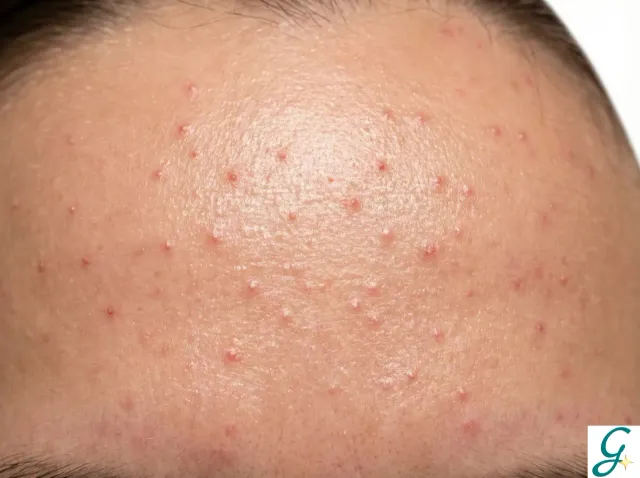
Fungal acne on the forehead is extremely common. Here's how to identify it:
Signs it's fungal acne:
- Small, uniform bumps (1-2mm) that look almost identical
- Clusters of bumps, often on the forehead, hairline, or temples
- Itching or tingling sensation
- Doesn't respond to benzoyl peroxide or salicylic acid
- Gets worse with heavy moisturizers or oils
- Appeared after antibiotic use or increased sweating
Signs it's NOT fungal acne:
- Bumps vary in size
- Presence of blackheads
- Deep, painful cysts
- Responds to traditional acne treatments
How to Get Rid of Fungal Acne
Step 1: Stop Feeding the Yeast
Many skincare products contain ingredients that Malassezia feeds on. Avoid:
- Fatty acids (lauric, myristic, palmitic, stearic, oleic acid)
- Fermented ingredients
- Most oils (coconut, olive, jojoba)
- Fatty alcohols in some cases
- Esters (isopropyl myristate, etc.)
Safe ingredients:
- Squalane (not squalene)
- MCT oil (C8/C10 only)
- Mineral oil
- Hyaluronic acid
- Niacinamide
- Glycerin
- Salicylic acid
Step 2: Use Antifungal Treatments
Over-the-counter options:
- Ketoconazole shampoo (Nizoral) — Apply as a mask for 5-10 minutes before rinsing. Use 2-3x per week.
- Zinc pyrithione soap — Antifungal and antibacterial. Use as a face wash.
- Sulfur treatments — Antifungal and drying. Good for spot treatment.
- Selenium sulfide shampoo — Similar to ketoconazole, use as a short-contact mask.
Prescription options:
- Oral antifungals (fluconazole, itraconazole)
- Prescription-strength topical antifungals
Step 3: Adjust Your Routine
Minimal fungal acne-safe routine:
- Cleanser: Gentle, fungal acne-safe formula
- Treatment: Antifungal (ketoconazole or zinc pyrithione)
- Moisturizer: Fungal acne-safe (check ingredients)
- Sunscreen: Mineral sunscreen without problematic ingredients
Best Products for Fungal Acne on Face
When shopping for fungal acne-safe products, always check ingredients against a Malassezia-safe database. Here are product categories to focus on:
Cleansers
Look for simple, gentle formulas without fatty acids or oils.
Treatments
- Ketoconazole 2% (Nizoral)
- Zinc pyrithione cleansers
- Sulfur spot treatments
- Azelaic acid (antifungal properties)
Moisturizers
- Gel moisturizers with hyaluronic acid
- Squalane-based products
- Urea-based creams
Sunscreens
- Mineral/physical sunscreens (zinc oxide, titanium dioxide)
- Check for fungal acne-safe formulas
Lifestyle Changes for Fungal Acne
Shower Immediately After Sweating
Don't let sweat sit on your skin. Shower and change clothes as soon as possible after exercise.
Wear Breathable Fabrics
Choose cotton and moisture-wicking materials over synthetic fabrics.
Change Pillowcases Frequently
Wash pillowcases 1-2 times per week to prevent yeast buildup.
Consider Your Diet
Reducing sugar and simple carbohydrates may help control yeast overgrowth.
Manage Stress
Stress weakens immunity and can trigger flare-ups.
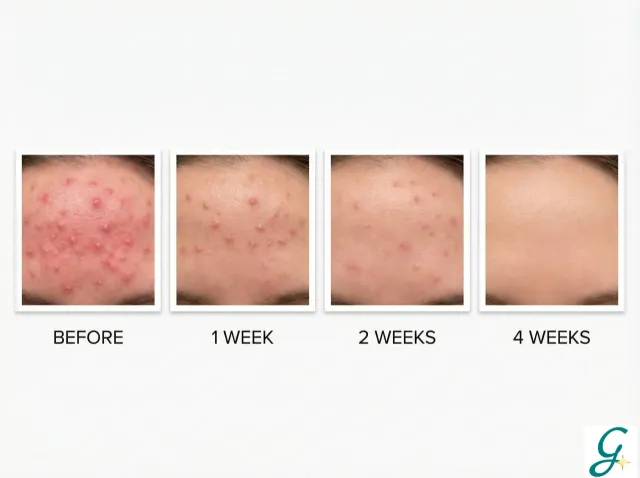
How Long Does It Take to Clear Fungal Acne?
With consistent treatment:
- 1-2 weeks: Noticeable improvement
- 4-6 weeks: Significant clearing
- Ongoing: Maintenance to prevent recurrence
Fungal acne can return if you stop antifungal treatments or reintroduce problematic products.
Common Mistakes When Treating Fungal Acne
- Using traditional acne products — Benzoyl peroxide and most acne treatments don't work on fungal acne
- Applying heavy moisturizers — Many moisturizers feed Malassezia
- Not checking all product ingredients — One problematic ingredient can sabotage your routine
- Stopping treatment too soon — Yeast can return quickly
- Over-cleansing — Stripping skin damages the barrier and worsens the condition
When to See a Dermatologist
Consult a dermatologist if:
- OTC treatments aren't working after 4-6 weeks
- You're unsure if it's fungal acne
- The condition is severe or spreading
- You need prescription-strength treatment
A dermatologist can perform a skin scraping to confirm Malassezia and prescribe oral antifungals if needed.
Frequently Asked Questions
How do I know if I have fungal acne or regular acne?
Fungal acne appears as uniform, small bumps (1-2mm) that look almost identical and are often itchy. Regular bacterial acne has varied bump sizes, includes blackheads and whiteheads, and typically isn't itchy. Fungal acne doesn't respond to traditional acne treatments like benzoyl peroxide and may worsen with antibiotics.
What kills fungal acne fast?
The fastest treatments include ketoconazole 2% (Nizoral shampoo used as a face mask for 5-10 minutes), zinc pyrithione soap, and sulfur treatments. Most people see noticeable improvement within 1-2 weeks of consistent antifungal treatment.
Can I pop fungal acne?
No, you should not pop fungal acne. Unlike bacterial acne, fungal acne bumps don't contain pus that can be extracted. Attempting to pop them can damage skin, spread the infection, and cause scarring. Use antifungal treatments instead.
What ingredients should I avoid with fungal acne?
Avoid fatty acids (lauric, myristic, palmitic, stearic, oleic acid), most oils (coconut, olive, jojoba), fermented ingredients, fatty alcohols, and esters like isopropyl myristate. These ingredients feed the Malassezia yeast that causes fungal acne.
Is fungal acne contagious?
No, fungal acne is not contagious. Malassezia yeast naturally lives on everyone's skin. Fungal acne occurs when this yeast overgrows due to factors like excess sweating, antibiotic use, or occlusive products—not from contact with others.
Why does my fungal acne keep coming back?
Fungal acne recurs when you stop antifungal treatments, reintroduce products containing ingredients that feed Malassezia, or return to habits that promote yeast growth (like not showering after sweating). Ongoing maintenance with fungal acne-safe products is essential.
Track Your Fungal Acne Treatment
Clearing fungal acne requires consistency and careful product selection. Tracking your routine helps you:
- Identify which products trigger flare-ups
- Monitor improvement over time
- Stay consistent with antifungal treatments
- Document what works for your skin
Glimmer helps you log products, track your skin's response, and maintain the consistent routine needed to clear fungal acne for good.
Sources
- Rubenstein, R. M., & Malerich, S. A. (2014). "Malassezia (Pityrosporum) Folliculitis." Journal of Clinical and Aesthetic Dermatology, 7(3), 37-41.
- Saunte, D. M. L., et al. (2020). "Malassezia-Associated Skin Diseases, the Use of Diagnostics and Treatment." Frontiers in Cellular and Infection Microbiology, 10, 112.
- Gupta, A. K., & Bluhm, R. (2004). "Seborrheic dermatitis." Journal of the European Academy of Dermatology and Venereology, 18(1), 13-26.