
More products don't mean better skin. In fact, a minimal skincare routine can be just as effective—sometimes more so—than a 10-step regimen. Here's how to achieve healthy skin with fewer products and less effort.
Why Less Is More in Skincare
The Problem with Too Many Products
- Irritation risk — More products mean more potential irritants
- Ingredient conflicts — Some actives don't play well together
- Barrier damage — Over-treating weakens your skin's natural protection
- Wasted money — Many products are redundant
- Unsustainable — Complex routines are hard to maintain
The Benefits of Minimalism
- Consistency — Simple routines are easier to stick with
- Less irritation — Fewer ingredients, fewer reactions
- Cost-effective — Invest in quality over quantity
- Time-saving — More time for everything else
- Better results — Consistency beats complexity
The Essential Three: Your Core Routine
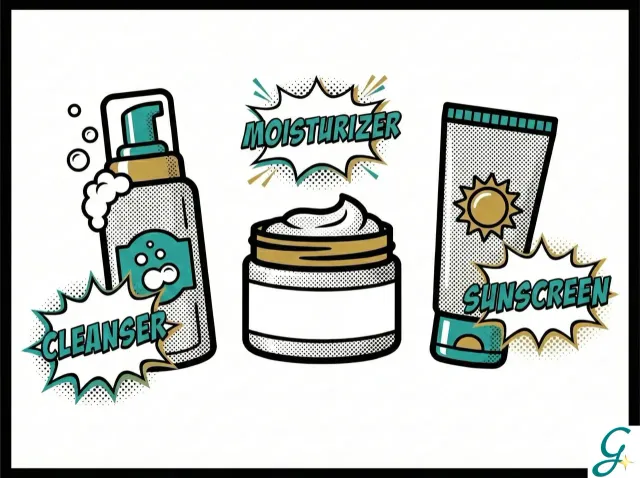
Every effective skincare routine needs just three products:
1. Cleanser
Purpose: Remove dirt, oil, makeup, and sunscreen without stripping skin.
What to look for:
- Gentle, pH-balanced formula
- No harsh sulfates
- Matches your skin type (gel for oily, cream for dry)
When: Morning (optional) and evening
2. Moisturizer
Purpose: Hydrate skin and support the barrier function.
What to look for:
- Appropriate texture for your skin type
- Hydrating ingredients (hyaluronic acid, glycerin)
- Barrier-supporting ingredients (ceramides, niacinamide)
When: Morning and evening
3. Sunscreen
Purpose: Protect against UV damage—the #1 cause of premature aging.
What to look for:
- SPF 30+ broad-spectrum
- Texture you'll actually use daily
- Non-comedogenic for acne-prone skin
When: Every morning, rain or shine
The Minimal Routine in Practice
Morning (2-3 minutes)
- Rinse with water or gentle cleanser
- Moisturizer — Hydrate and prep skin
- Sunscreen — Protect from UV damage
Evening (3-5 minutes)
- Cleanser — Remove the day's buildup
- Moisturizer — Repair and hydrate overnight
That's it. This routine covers the fundamentals of skin health.
When to Add a Fourth Product
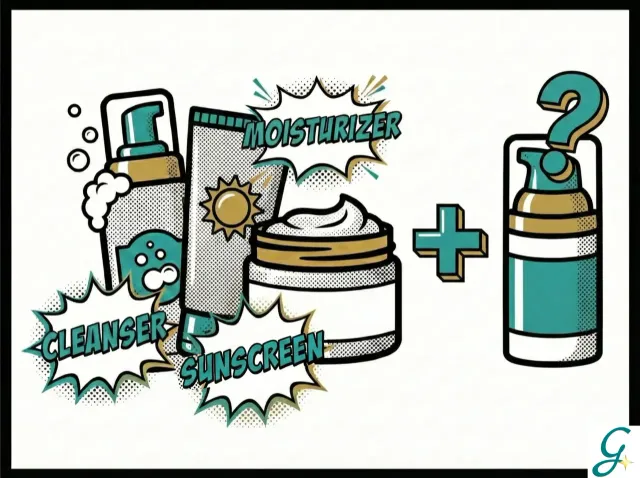
Once your basic routine is consistent, you might add ONE treatment product based on your primary concern:
For Anti-Aging
Add: Retinol (evening, 2-3x/week)
Retinol increases cell turnover, boosts collagen, and addresses fine lines. Start with a low percentage and build up.
For Acne
Add: Salicylic acid cleanser or treatment
BHA penetrates pores and reduces breakouts. Can replace your regular cleanser or use as a spot treatment.
For Dullness/Hyperpigmentation
Add: Vitamin C serum (morning)
Antioxidant protection and brightening. Apply before moisturizer.
For Dryness
Add: Hyaluronic acid serum or facial oil
Extra hydration layer before moisturizer.
Multi-Tasking Products for Minimalists
Moisturizers with SPF
Combine two steps in one. Look for SPF 30+ with good UVA protection. Note: You may need to apply more than you would with a regular moisturizer.
Tinted Sunscreens
Sun protection + light coverage. Great for no-makeup days.
Treatment Moisturizers
Moisturizers with niacinamide, retinol, or other actives built in.
Cleansing Balms
Remove makeup and cleanse in one step. Massage in, add water to emulsify, rinse off.
What You Can Skip
Toner
Unless you have a specific concern it addresses, toner is optional. Modern cleansers are pH-balanced.
Eye Cream
Most eye creams are just expensive moisturizers. Your regular moisturizer works fine around the eyes.
Essence
Popular in K-beauty, but not essential. A good serum or moisturizer covers this.
Multiple Serums
One targeted treatment is enough. Layering 3-4 serums is overkill for most people.
Masks
Nice for self-care, but not necessary for skin health. Your daily routine does the heavy lifting.
Minimal Skincare by Skin Type
Oily Skin
- Cleanser: Gel or foaming, gentle
- Moisturizer: Lightweight gel or lotion
- Sunscreen: Mattifying, oil-free
Dry Skin
- Cleanser: Cream or oil-based
- Moisturizer: Rich cream with ceramides
- Sunscreen: Hydrating formula
Combination Skin
- Cleanser: Gentle gel or cream
- Moisturizer: Lightweight lotion
- Sunscreen: Balanced formula
Sensitive Skin
- Cleanser: Fragrance-free, minimal ingredients
- Moisturizer: Barrier-supporting, fragrance-free
- Sunscreen: Mineral, fragrance-free
Common Minimalist Mistakes
1. Skipping Sunscreen
The most important product in any routine. Never skip it.
2. Using Harsh Cleansers
Stripping your skin damages the barrier. Gentle is always better.
3. Changing Products Too Often
Give products 4-6 weeks to work before switching.
4. Adding Products Too Fast
If you add a treatment, introduce it slowly. One new product at a time.
5. Expecting Miracles
A minimal routine maintains healthy skin. For specific concerns, you may need targeted treatments.
The Minimalist Mindset
Minimalist skincare is about:
- Quality over quantity — Invest in good basics
- Consistency over complexity — A simple routine you do daily beats an elaborate one you skip
- Patience over products — Give your skin time to respond
- Listening to your skin — Add products only when needed
How Long Until You See Results?
With a consistent minimal routine:
- 1-2 weeks: Skin feels balanced, less irritated
- 4-6 weeks: Improved hydration and texture
- 3+ months: Long-term benefits of sun protection and consistent care
Frequently Asked Questions
What is the simplest skincare routine that works?
The simplest effective routine is three steps: cleanser, moisturizer, and sunscreen (morning). At night, just cleanser and moisturizer. This covers the fundamentals—clean skin, hydration, and sun protection. You can achieve healthy skin with just these basics done consistently.
Is a 3-step skincare routine enough?
Yes, for most people a 3-step routine (cleanser, moisturizer, SPF) is enough for maintaining healthy skin. The key is consistency. A simple routine you do every day is more effective than an elaborate 10-step routine you skip. Add treatments only if you have specific concerns.
What order should a minimal skincare routine be?
Morning: cleanser → moisturizer → sunscreen. Evening: cleanser → moisturizer. If you add one treatment, place it after cleansing and before moisturizer. Always apply products from thinnest to thickest consistency.
How long should I wait between skincare steps?
For a minimal routine, you don't need to wait long between steps. Let each product absorb for about 30 seconds before applying the next. For sunscreen, wait 2-3 minutes before applying makeup to let it set properly.
Can I skip moisturizer if I have oily skin?
No, even oily skin needs moisturizer. Skipping it can actually increase oil production as your skin tries to compensate for dehydration. Use a lightweight, oil-free gel moisturizer instead of skipping this step entirely.
How do I know if my minimal routine is working?
Signs your routine is working: skin feels balanced (not tight or overly oily), no new breakouts, skin looks healthy and hydrated, and you're not experiencing irritation. Give any routine 4-6 weeks before judging results—skin cell turnover takes time.
Track Your Minimal Routine
Even a simple routine requires consistency. Tracking helps you:
- Build the daily habit
- Notice how your skin responds
- Stay accountable to your routine
- Know when (and if) to add products
Glimmer makes it easy to track a minimal routine without overcomplicating things. Set your three essential steps and get gentle reminders.
Sources
- Draelos, Z. D. (2018). "The science behind skin care: Cleansers." Journal of Cosmetic Dermatology, 17(1), 8-14.
- Rawlings, A. V., & Harding, C. R. (2004). "Moisturization and skin barrier function." Dermatologic Therapy, 17(s1), 43-48.
- Lim, H. W., et al. (2017). "Sunscreen FAQ: A review of the 2016 Food and Drug Administration proposed rulemaking on sunscreen drug products." Journal of the American Academy of Dermatology, 76(5), 958-964.