
Rosacea affects millions of people, causing redness, flushing, and sensitivity that makes skincare challenging. The right routine can dramatically reduce symptoms—but the wrong products can trigger painful flare-ups.
Understanding Rosacea
Rosacea is a chronic inflammatory skin condition characterized by:
- Persistent redness — Usually on cheeks, nose, chin, forehead
- Flushing — Episodes of intense redness
- Visible blood vessels — Broken capillaries on the face
- Bumps and pimples — Can resemble acne
- Skin sensitivity — Burning, stinging, irritation
- Eye involvement — Dryness, irritation, redness (ocular rosacea)
Types of Rosacea
- Erythematotelangiectatic — Redness, flushing, visible blood vessels
- Papulopustular — Redness with acne-like breakouts
- Phymatous — Thickening skin, usually on nose
- Ocular — Affects eyes, causing irritation and redness
Most people have a combination of types.
The Rosacea Skincare Philosophy
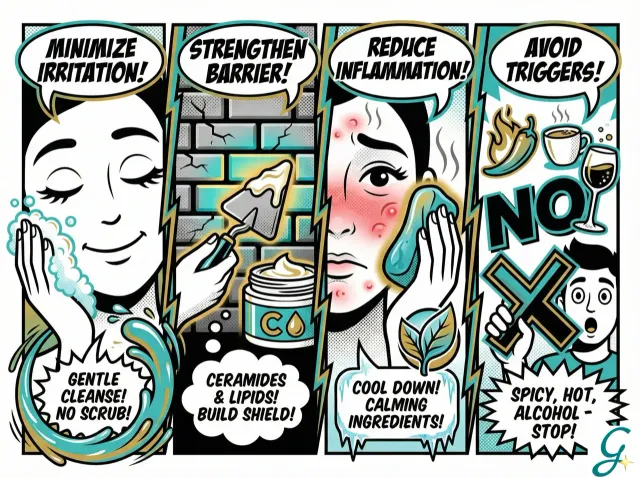
Less is more. Rosacea skin has a compromised barrier and heightened sensitivity. Your routine should:
- Minimize irritation
- Strengthen the skin barrier
- Reduce inflammation
- Avoid known triggers
The Best Rosacea Skincare Routine
Morning Routine
- Gentle Cleanser
- Lukewarm water only (no hot water)
- Fragrance-free, soap-free formula
- Cream or milk texture
- Pat dry, don't rub
- Calming Serum (Optional)
- Niacinamide (anti-inflammatory)
- Centella asiatica (soothing)
- Azelaic acid (reduces redness)
- Moisturizer for Rosacea Skin
- Fragrance-free, minimal ingredients
- Barrier-supporting (ceramides)
- Soothing ingredients (aloe, allantoin)
- Mineral Sunscreen
- Zinc oxide or titanium dioxide
- SPF 30+
- Fragrance-free
- Tinted options help neutralize redness
Evening Routine
- Gentle Cleanser
- Same as morning
- Double cleanse only if wearing heavy makeup/SPF
- Treatment (If Tolerated)
- Azelaic acid (prescription or OTC)
- Prescription medications if recommended
- Moisturizer
- Can be slightly richer than daytime
- Focus on barrier repair
Key Ingredients for Rosacea
Beneficial Ingredients
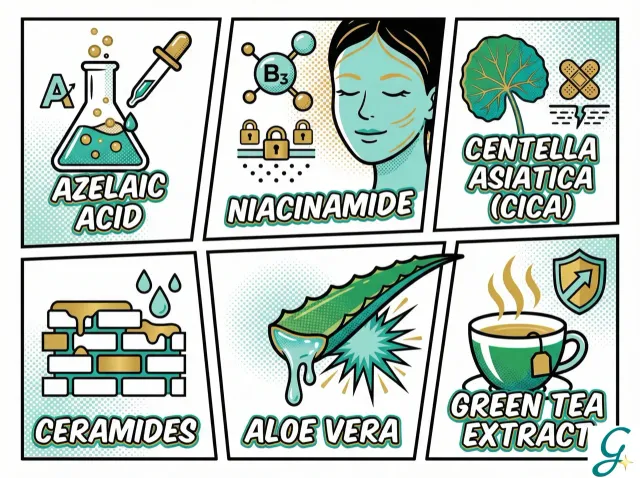
Azelaic Acid
The gold standard for rosacea:
- Reduces redness and inflammation
- Antibacterial properties
- Helps with papulopustular rosacea
- Available OTC (10%) and prescription (15-20%)
Niacinamide
Excellent for rosacea:
- Anti-inflammatory
- Strengthens skin barrier
- Reduces redness over time
- Well-tolerated by most
Centella Asiatica (Cica)
Soothing and healing:
- Calms inflammation
- Supports barrier repair
- Found in many K-beauty products
Ceramides
Essential for barrier repair:
- Restore skin's protective layer
- Reduce sensitivity
- Prevent moisture loss
Aloe Vera
Calming and hydrating:
- Soothes irritation
- Anti-inflammatory
- Cooling effect
Green Tea Extract
Antioxidant and anti-inflammatory:
- Reduces redness
- Protects against environmental stress
Ingredients to Avoid
- Fragrance/Parfum — Major irritant
- Alcohol (denat.) — Drying and irritating
- Menthol, peppermint, eucalyptus — Cause flushing
- Witch hazel — Too astringent
- Sodium lauryl sulfate — Harsh surfactant
- Essential oils — Common irritants
- Exfoliating acids (high strength) — Too aggressive
Common Questions About Rosacea Skincare
Is Hyaluronic Acid Good for Rosacea Skin?
Yes. Hyaluronic acid is generally well-tolerated and beneficial:
- Provides hydration without irritation
- Helps plump and calm skin
- Supports barrier function
Tips:
- Choose fragrance-free formulas
- Apply to damp skin
- Follow with moisturizer to seal in hydration
Is Vitamin C Good for Rosacea Skin?
It depends. Vitamin C can be tricky for rosacea:
Potential benefits:
- Antioxidant protection
- May strengthen blood vessels
- Brightening effects
Potential issues:
- L-ascorbic acid (pure vitamin C) can irritate
- Low pH formulas may sting
If you want to try:
- Start with gentle derivatives (ascorbyl glucoside, magnesium ascorbyl phosphate)
- Use low concentrations (5-10%)
- Patch test extensively
- Discontinue if irritation occurs
How to Exfoliate Rosacea Skin
Exfoliation is tricky with rosacea. Physical scrubs are too harsh, but gentle chemical exfoliation may help.
Safe approach:
- Azelaic acid — Provides gentle exfoliation while treating rosacea
- PHAs (polyhydroxy acids) — Gentler than AHAs
- Low-strength lactic acid — If tolerated (patch test first)
- Enzyme masks — Gentle, occasional use
Rules for exfoliating rosacea skin:
- Never use physical scrubs
- Start with lowest concentration
- Use once weekly maximum
- Stop if any irritation occurs
- Always follow with soothing moisturizer
Rosacea Triggers to Avoid
Skincare Triggers
- Hot water
- Harsh cleansers
- Fragrance
- Alcohol-based products
- Over-exfoliation
- Too many active ingredients
Environmental Triggers
- Sun exposure
- Extreme temperatures
- Wind
- Humidity changes
Lifestyle Triggers
- Spicy foods
- Alcohol (especially red wine)
- Hot beverages
- Stress
- Intense exercise
Track Your Triggers
Everyone's triggers are different. Keep a diary to identify yours.
Building a Rosacea-Safe Product Collection
Cleansers
Look for:
- Cream or milk texture
- Fragrance-free
- Soap-free
- pH-balanced
Moisturizers
Look for:
- Ceramides
- Minimal ingredients
- Fragrance-free
- Soothing ingredients
Sunscreens
Look for:
- Mineral (zinc oxide, titanium dioxide)
- Fragrance-free
- Tinted options to neutralize redness
- SPF 30+
Makeup
Look for:
- Mineral-based
- Fragrance-free
- Green color-correcting primers
- Non-comedogenic
When to See a Dermatologist
Rosacea often requires professional treatment:
- Prescription azelaic acid — Higher strength than OTC
- Metronidazole — Topical antibiotic
- Ivermectin — Anti-parasitic that helps rosacea
- Brimonidine/Oxymetazoline — Reduce redness temporarily
- Oral antibiotics — For moderate to severe cases
- Laser treatments — For visible blood vessels
Don't suffer in silence—dermatologists have effective treatments.
Living with Rosacea
Flare-Up Management
When a flare occurs:
- Simplify routine to cleanser + moisturizer
- Apply cool (not cold) compresses
- Avoid all potential triggers
- Use green-tinted products to neutralize redness
- Be patient—flares pass
Long-Term Management
- Consistency with gentle routine
- Strict sun protection
- Trigger avoidance
- Regular dermatologist visits
- Patience and self-compassion
Sample Rosacea Skincare Routine
Minimal Routine (During Flares):
- AM: Rinse with lukewarm water → Moisturizer → Mineral sunscreen
- PM: Gentle cleanser → Moisturizer
Maintenance Routine:
- AM: Gentle cleanser → Niacinamide serum → Moisturizer → Mineral sunscreen
- PM: Gentle cleanser → Azelaic acid → Moisturizer
Frequently Asked Questions
What is the best skincare routine for rosacea?
A rosacea-friendly routine is minimal and gentle: lukewarm water or gentle fragrance-free cleanser, soothing moisturizer with ceramides or niacinamide, and mineral sunscreen (zinc oxide). Avoid foaming cleansers, fragrance, alcohol, and harsh actives. During flares, simplify to just moisturizer and sunscreen.
What triggers rosacea flare-ups?
Common triggers include: sun exposure, hot/cold weather, spicy foods, alcohol (especially red wine), hot beverages, stress, intense exercise, hot showers, and certain skincare ingredients (fragrance, alcohol, menthol, witch hazel). Triggers vary by person—tracking helps identify yours.
Can rosacea be cured?
Rosacea cannot be cured, but it can be effectively managed. With proper skincare, trigger avoidance, and medical treatment when needed, many people achieve significant improvement. The goal is minimizing flares and maintaining calm skin through consistent gentle care.
What ingredients should I avoid with rosacea?
Avoid: fragrance, alcohol (denat.), witch hazel, menthol, peppermint, eucalyptus, strong acids (high-concentration AHAs/BHAs), retinoids (unless prescribed and introduced very slowly), physical scrubs, and essential oils. These can trigger inflammation and worsen rosacea.
Is niacinamide good for rosacea?
Yes, niacinamide is one of the best ingredients for rosacea. It strengthens the skin barrier, reduces inflammation, and can help with redness. Start with low concentrations (2-5%) and choose fragrance-free formulas. It's generally well-tolerated by rosacea-prone skin.
Should I use sunscreen if I have rosacea?
Absolutely—sun protection is critical for rosacea. UV exposure is a major trigger for flares. Use mineral sunscreen (zinc oxide and/or titanium dioxide) SPF 30+, which is less irritating than chemical sunscreen. Tinted formulas can also help neutralize redness.
Track Your Rosacea Journey
Managing rosacea requires consistency and careful observation. Tracking helps you:
- Identify triggers
- Monitor flare patterns
- Stay consistent with gentle routine
- Document what works (and what doesn't)
Glimmer helps you build a gentle, consistent routine with reminders and tracking designed for sensitive skin.
Sources
- Two, A. M., et al. (2015). "Rosacea: Part I. Introduction, categorization, histology, pathogenesis, and risk factors." Journal of the American Academy of Dermatology, 72(5), 749-758.
- Del Rosso, J. Q. (2012). "Advances in Understanding and Managing Rosacea: Part 1." Journal of Clinical and Aesthetic Dermatology, 5(3), 16-25.
- Draelos, Z. D. (2018). "The science behind skin care: Cleansers." Journal of Cosmetic Dermatology, 17(1), 8-14.