
Your 30s are when skincare gets real. The habits you build now determine how your skin looks in your 40s, 50s, and beyond. Here's your complete guide to skincare in this pivotal decade.

What Happens to Skin in Your 30s
Your skin is changing, even if you don't see it yet:
- Collagen production decreases — About 1% per year after 25
- Cell turnover slows — Skin looks duller, takes longer to heal
- Fine lines appear — Especially around eyes and forehead
- Skin may become drier — Oil production decreases
- Sun damage surfaces — Years of UV exposure start showing
- Hormonal changes — Can affect skin texture and breakouts
The good news? Your 30s are the perfect time to prevent and treat these changes.
The 30s Skincare Priorities
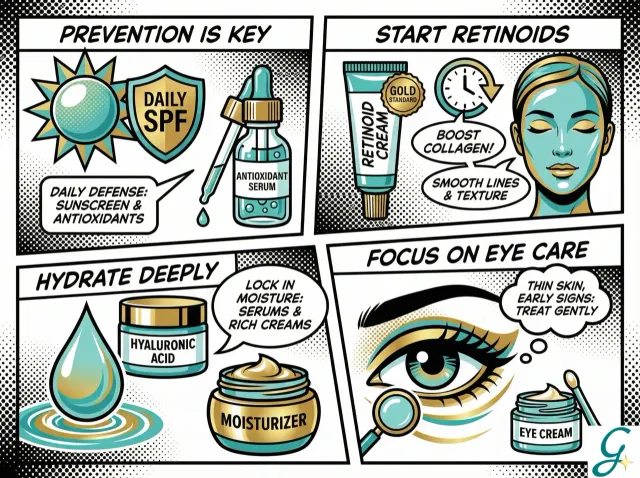
1. Prevention Over Correction
It's easier to prevent aging than reverse it. Focus on:
- Daily sunscreen (non-negotiable)
- Antioxidant protection
- Maintaining skin barrier health
2. Start Retinoids
If you haven't started retinoids, now is the time. They're the gold standard for:
- Preventing and treating fine lines
- Boosting collagen production
- Improving skin texture and tone
3. Hydration Is Key
As skin produces less oil, hydration becomes crucial:
- Hyaluronic acid serums
- Richer moisturizers
- Hydrating masks
4. Eye Care Matters
The eye area shows aging first:
- Thinnest skin on the face
- Constant movement (blinking, expressions)
- Often neglected in earlier years
The Complete 30s Skincare Routine
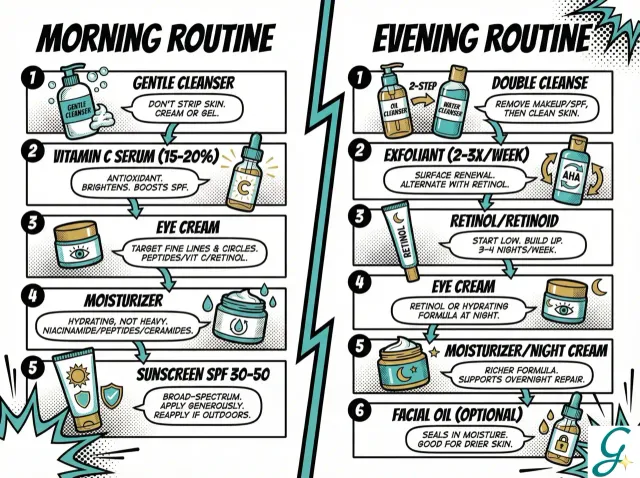
Morning Routine
- Gentle Cleanser
- Don't strip your skin
- Cream or gel based on preference
- Vitamin C Serum (15-20%)
- Antioxidant protection
- Brightens and evens tone
- Boosts sunscreen effectiveness
- Eye Cream
- Target fine lines and dark circles
- Look for peptides, vitamin C, or retinol
- Moisturizer
- Hydrating but not heavy
- Look for niacinamide, peptides, or ceramides
- Sunscreen SPF 30-50
- Broad-spectrum protection
- Apply generously
- Reapply if outdoors
Evening Routine
- Double Cleanse
- Oil cleanser to remove makeup/SPF
- Water-based cleanser to clean skin
- Exfoliant (2-3x/week)
- AHA for surface renewal
- Alternate nights with retinol
- Retinol/Retinoid
- Start with 0.25-0.5% retinol
- Build up to stronger formulas
- Use 3-4 nights per week initially
- Eye Cream
- Can use retinol eye cream at night
- Or hydrating formula
- Moisturizer/Night Cream
- Richer than daytime formula
- Supports overnight repair
- Facial Oil (Optional)
- Seals in moisture
- Good for drier skin types
Key Ingredients for Your 30s
Retinoids (Essential)
The most proven anti-aging ingredient:
- Retinol — OTC, gentler, good starting point
- Retinaldehyde — Stronger than retinol, less irritating than tretinoin
- Tretinoin — Prescription, most effective
How to start:
- Begin with low-strength retinol (0.25%)
- Use 2-3 nights per week
- Gradually increase frequency
- Always use sunscreen the next day
Vitamin C (Essential)
Powerful antioxidant that:
- Protects against environmental damage
- Brightens skin
- Supports collagen production
- Enhances sunscreen protection
Best forms: L-ascorbic acid (10-20%), or gentler derivatives for sensitive skin
Peptides
Signal skin to produce more collagen:
- Matrixyl
- Copper peptides
- Argireline
Found in serums and moisturizers. Layer well with other ingredients.
Niacinamide
Versatile ingredient that:
- Strengthens skin barrier
- Reduces fine lines
- Minimizes pores
- Evens skin tone
Works well with most other ingredients.
Hyaluronic Acid
Hydration powerhouse:
- Holds 1000x its weight in water
- Plumps fine lines
- Works for all skin types
Apply to damp skin for best results.
Addressing 30s Skin Concerns
Fine Lines and Wrinkles
Prevention: Sunscreen, antioxidants Treatment: Retinoids, peptides, vitamin C Professional: Botox, fillers, microneedling
Dullness and Uneven Tone
Causes: Slower cell turnover, sun damage Treatment: Vitamin C, AHAs, retinoids Quick fix: Chemical exfoliation, brightening masks
Adult Acne
Common in 30s due to hormones:
- Salicylic acid for breakouts
- Niacinamide to regulate oil
- Retinoids for prevention
- See dermatologist for hormonal acne
Dark Circles and Eye Bags
For dark circles: Vitamin C, caffeine, color-correcting concealer For puffiness: Caffeine, cold compresses, adequate sleep For fine lines: Retinol eye cream, peptides
Loss of Firmness
Early signs of sagging:
- Retinoids boost collagen
- Peptides support firmness
- Professional: RF treatments, ultrasound therapy
Lifestyle Factors That Matter More Now
Sleep
Your skin repairs during sleep:
- Aim for 7-9 hours
- Sleep on your back to prevent creasing
- Use silk pillowcase to reduce friction
Diet
What you eat shows on your skin:
- Antioxidant-rich foods (berries, leafy greens)
- Omega-3 fatty acids (fish, walnuts)
- Limit sugar (accelerates aging)
- Stay hydrated
Stress Management
Chronic stress accelerates aging:
- Increases cortisol (breaks down collagen)
- Triggers breakouts
- Disrupts sleep
Find healthy stress outlets.
Exercise
Regular exercise:
- Increases circulation
- Delivers nutrients to skin
- Reduces stress
- Promotes healthy glow
Sun Protection
More important than ever:
- Daily SPF 30+
- Reapply every 2 hours outdoors
- Wear hats and sunglasses
- Seek shade during peak hours
Professional Treatments to Consider
In Your Early 30s
- Chemical peels — Accelerate cell turnover
- Microneedling — Boost collagen production
- LED therapy — Stimulate skin repair
In Your Late 30s
- Botox — Prevent and treat expression lines
- Laser treatments — Address sun damage, texture
- Fillers — Restore volume if needed
Always consult with a qualified dermatologist or aesthetician.
Common 30s Skincare Mistakes
1. Thinking You're Too Young for Anti-Aging
Prevention is easier than correction. Start now.
2. Using the Same Products as Your 20s
Your skin has changed. Update your routine accordingly.
3. Skipping Sunscreen
Every day without SPF adds to cumulative damage.
4. Over-Treating
More products ≠ better results. Focus on proven ingredients.
5. Neglecting Neck and Chest
These areas age too. Extend your routine below your jawline.
6. Inconsistency
Results require consistent effort over months and years.
Building Your 30s Skincare Plan
Immediate priorities:
- Sunscreen daily (if not already)
- Start retinol (low and slow)
- Add vitamin C to mornings
Within 3 months:
- Establish consistent AM/PM routine
- Add eye cream
- Incorporate regular exfoliation
Ongoing:
- Adjust products seasonally
- Consider professional treatments
- Track progress and adapt
Frequently Asked Questions
What skincare should I use in my 30s?
In your 30s, focus on: sunscreen daily (SPF 30+), retinol/retinoid (start low, 0.25-0.5%), vitamin C serum (morning), hydrating ingredients (hyaluronic acid), and eye cream. These address the main 30s concerns: prevention of further damage and early treatment of fine lines, uneven tone, and loss of radiance.
When should I start using retinol?
You can start retinol in your mid-20s for prevention, but your 30s is an ideal time if you haven't started. Begin with a low concentration (0.25-0.5%) 2-3 times per week, gradually increasing frequency. Always use sunscreen when using retinoids as they increase sun sensitivity.
What are the first signs of aging in your 30s?
Common early signs include: fine lines around eyes and forehead, loss of radiance/dullness, uneven skin tone, larger-appearing pores, slower healing, and early volume loss. These are normal and can be addressed with consistent skincare focusing on retinoids, antioxidants, and sun protection.
Is 30 too late to start a skincare routine?
No, it's never too late. While prevention is ideal, starting in your 30s still provides significant benefits. Your skin can still respond well to retinoids, antioxidants, and sun protection. Consistent care from 30 onwards can dramatically slow visible aging compared to no routine.
How often should I exfoliate in my 30s?
Exfoliate 2-3 times per week with chemical exfoliants (AHAs like glycolic acid or lactic acid). In your 30s, cell turnover slows, making regular exfoliation more important. However, if you're using retinoids, you may need less frequent exfoliation to avoid irritation.
Should I use eye cream in my 30s?
Yes, the eye area is often the first to show aging signs due to thin, delicate skin. Look for eye creams with peptides, retinol (formulated for eyes), caffeine (for puffiness), and vitamin C. Apply morning and night with gentle patting motions.
Track Your Anti-Aging Journey
Consistency is everything in your 30s. The habits you build now pay dividends for decades.
Glimmer helps you:
- Stay consistent with your routine
- Track which products work
- Document your skin's progress
- Build lasting skincare habits
Sources
- Mukherjee, S., et al. (2006). "Retinoids in the treatment of skin aging: an overview of clinical efficacy and safety." Clinical Interventions in Aging, 1(4), 327-348.
- Ganceviciene, R., et al. (2012). "Skin anti-aging strategies." Dermato-Endocrinology, 4(3), 308-319.
- Hughes, M. C. B., et al. (2013). "Sunscreen and Prevention of Skin Aging: A Randomized Trial." Annals of Internal Medicine, 158(11), 781-790.