
Even skincare enthusiasts make mistakes. Some habits seem helpful but actually harm your skin. Let's debunk the myths and correct the mistakes that might be sabotaging your routine.
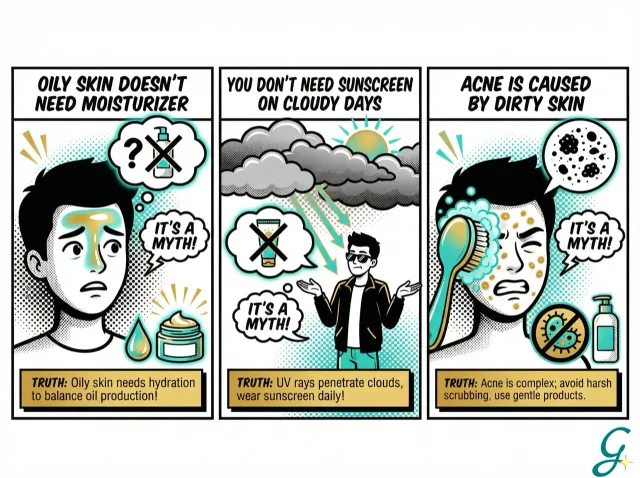
The Biggest Skincare Myths
Myth 1: "You Need to Feel the Burn for Products to Work"
The Truth: Burning, stinging, or intense tingling means irritation—not effectiveness. While some active ingredients cause mild tingling initially, persistent discomfort signals damage.
What to do: If a product burns, rinse it off. Effective skincare shouldn't hurt.
Myth 2: "Oily Skin Doesn't Need Moisturizer"
The Truth: All skin types need hydration. When oily skin is dehydrated, it produces MORE oil to compensate. Skipping moisturizer makes oiliness worse.
What to do: Use a lightweight, oil-free moisturizer. Gel formulas work well for oily skin.
Myth 3: "Natural/Organic Is Always Better"
The Truth: "Natural" doesn't mean safe or effective. Poison ivy is natural. Many synthetic ingredients are well-researched and gentle, while some natural ingredients (essential oils, fragrances) are common irritants.
What to do: Focus on evidence-based ingredients, not marketing terms.
Myth 4: "You Don't Need Sunscreen on Cloudy Days"
The Truth: Up to 80% of UV rays penetrate clouds. UV damage occurs year-round, even in winter and on overcast days.
What to do: Wear SPF 30+ every single day, regardless of weather.
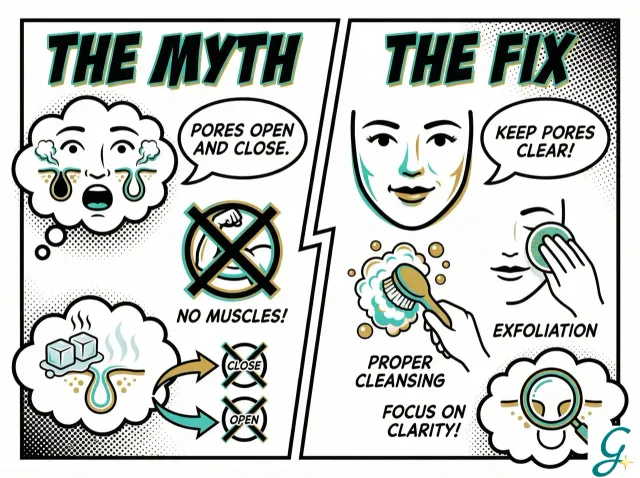
Myth 5: "Pores Open and Close"
The Truth: Pores don't have muscles. They can't open or close. Steam doesn't "open" pores, and cold water doesn't "close" them.
What to do: Focus on keeping pores clear with proper cleansing and exfoliation.
Myth 6: "Higher SPF Is Always Better"
The Truth: SPF 30 blocks 97% of UVB rays. SPF 50 blocks 98%. SPF 100 blocks 99%. The difference is minimal, and higher SPF often means heavier formulas people use less of.
What to do: Use SPF 30-50 and apply generously. Reapplication matters more than SPF number.
Myth 7: "You Should Change Products Regularly So Skin Doesn't Get Used to Them"
The Truth: Skin doesn't build tolerance to most ingredients. Consistent use of effective products yields the best results. Constantly switching prevents you from seeing what works.
What to do: Stick with products for 6-8 weeks before evaluating. Only change if something isn't working.
Myth 8: "Expensive Products Work Better"
The Truth: Price doesn't determine effectiveness. Many affordable products contain the same active ingredients as luxury brands. You're often paying for packaging, marketing, and brand name.
What to do: Focus on ingredients, not price tags. Effective basics exist at every price point.
Myth 9: "Drinking Water Fixes Dry Skin"
The Truth: While hydration is important for overall health, drinking water doesn't directly hydrate your skin's surface. Topical moisturizers are far more effective for dry skin.
What to do: Stay hydrated for health, but use proper moisturizers for dry skin.
Myth 10: "Acne Is Caused by Dirty Skin"
The Truth: Acne is caused by hormones, genetics, bacteria, and inflammation—not dirt. Over-cleansing to "clean" acne actually makes it worse by damaging the skin barrier.
What to do: Cleanse twice daily with a gentle cleanser. Treat acne with appropriate ingredients (salicylic acid, benzoyl peroxide, retinoids).
Common Skincare Mistakes
Mistake 1: Over-Cleansing
The problem: Washing your face more than twice daily strips natural oils, damages the skin barrier, and triggers more oil production.
Signs you're over-cleansing:
- Tight, dry feeling after washing
- Increased oiliness
- Redness or irritation
- Breakouts despite frequent washing
The fix: Cleanse morning and evening only. Use a gentle, pH-balanced cleanser.
Mistake 2: Using Too Many Active Ingredients
The problem: Layering retinol, vitamin C, AHAs, BHAs, and other actives in one routine overwhelms skin and causes irritation.
Signs of over-treatment:
- Redness and sensitivity
- Peeling or flaking
- Burning or stinging
- Breakouts
The fix: Use 1-2 actives maximum. Alternate strong ingredients on different nights.
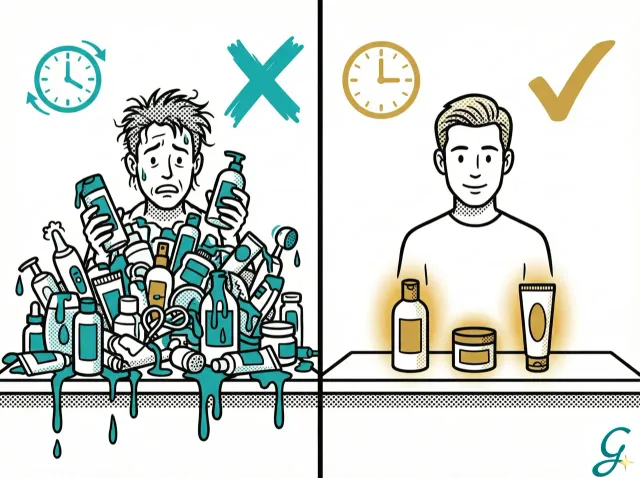
Mistake 3: Applying Products in the Wrong Order
The problem: Wrong order prevents products from absorbing properly and reduces effectiveness.
The rule: Apply thinnest to thickest consistency. Water-based before oil-based.
Correct order:
- Cleanser
- Toner
- Serum (thinnest first)
- Eye cream
- Moisturizer
- Face oil
- Sunscreen (morning only, last step)
Mistake 4: Not Using Enough Sunscreen
The problem: Most people apply only 25-50% of the recommended amount, dramatically reducing protection.
The fix: Use 1/4 teaspoon for face alone. That's about two finger-lengths of product.
Mistake 5: Skipping Patch Tests
The problem: New products can cause reactions. Applying directly to your face risks widespread irritation.
The fix: Test new products on your inner arm or behind your ear for 24-48 hours before facial use.
Mistake 6: Exfoliating Too Often
The problem: Daily exfoliation damages the skin barrier, causing sensitivity, redness, and paradoxically worse texture.
Signs of over-exfoliation:
- Increased sensitivity
- Redness
- Tight, shiny skin
- More breakouts
The fix: Exfoliate 2-3 times per week maximum. Less for sensitive skin.
Mistake 7: Ignoring Your Neck and Chest
The problem: These areas age just like your face but are often neglected.
The fix: Extend your entire routine—cleanser, serums, moisturizer, sunscreen—to your neck and chest.
Mistake 8: Using Hot Water
The problem: Hot water strips natural oils and can trigger redness, especially in sensitive or rosacea-prone skin.
The fix: Use lukewarm water for cleansing.
Mistake 9: Touching Your Face
The problem: Your hands transfer bacteria, oil, and dirt to your face, contributing to breakouts.
The fix: Keep hands away from your face. Clean your phone screen regularly.
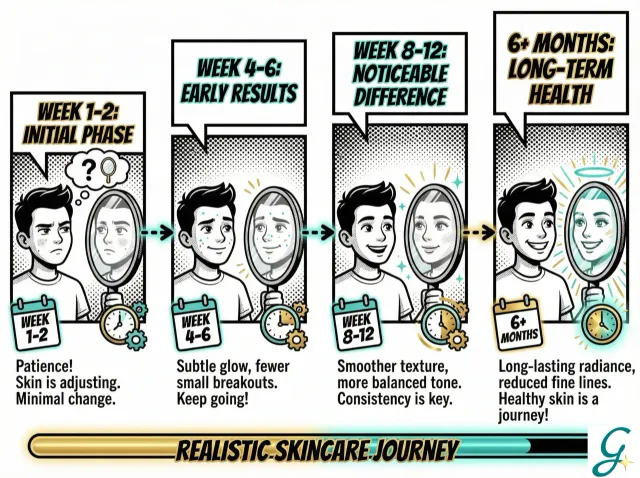
Mistake 10: Expecting Overnight Results
The problem: Impatience leads to product-hopping before giving anything time to work.
The reality:
- Hydration: 1-2 weeks
- Acne improvement: 6-8 weeks
- Hyperpigmentation: 2-3 months
- Anti-aging: 3-6 months
The fix: Commit to products for at least 6-8 weeks before evaluating.
Mistake 11: Sleeping in Makeup
The problem: Makeup, sunscreen, and daily grime clog pores overnight, leading to breakouts and dull skin.
The fix: Always cleanse before bed, no matter how tired you are.
Mistake 12: Using Physical Scrubs Too Harshly
The problem: Aggressive scrubbing with harsh particles (walnut shells, apricot pits) creates micro-tears in skin.
The fix: If using physical exfoliants, choose gentle formulas with round particles. Better yet, use chemical exfoliants.
Mistake 13: Storing Products Incorrectly
The problem: Heat, light, and air degrade active ingredients, especially vitamin C and retinol.
The fix: Store products in a cool, dark place. Keep vitamin C in the fridge if possible.
Mistake 14: Using Expired Products
The problem: Expired products lose effectiveness and can harbor bacteria.
The fix: Check expiration dates. Note when you open products (most last 6-12 months after opening).
Mistake 15: Following Trends Instead of Your Skin's Needs
The problem: What works for influencers may not work for you. Skin is individual.
The fix: Build your routine based on YOUR skin type and concerns, not what's trending.
How to Fix Your Routine
Step 1: Simplify
Strip back to basics:
- Gentle cleanser
- Moisturizer
- Sunscreen
Step 2: Identify Issues
What's actually bothering your skin? Focus on 1-2 concerns maximum.
Step 3: Add Strategically
Introduce one new product at a time, waiting 2 weeks between additions.
Step 4: Be Consistent
Give products time to work. Track your routine to stay accountable.
Step 5: Listen to Your Skin
If something causes irritation, stop using it. Your skin knows best.
Frequently Asked Questions
What is the biggest skincare mistake people make?
The biggest mistake is skipping sunscreen. UV damage causes up to 80% of visible skin aging and worsens almost every skin concern (acne scars, pigmentation, texture). Daily SPF 30+ is more important than any other product in your routine.
Is it bad to use too many skincare products?
Yes, using too many products—especially actives—can damage your skin barrier, causing irritation, sensitivity, and breakouts. A simple routine of 3-5 products is often more effective than 10+ products. Focus on proven ingredients and give each product time to work.
Should I wash my face in the morning?
It depends on your skin. Oily skin benefits from morning cleansing. Dry or sensitive skin may do better with just water or a gentle rinse. If you applied heavy products the night before, cleansing helps remove residue. Listen to your skin.
How long should I try a product before giving up?
Give most products 4-6 weeks (one skin cell cycle). Retinoids and anti-aging products need 8-12 weeks. Stop immediately if you experience severe irritation or allergic reactions. Mild adjustment periods (slight dryness, minor purging) are normal for some actives.
Is expensive skincare better than drugstore?
Not necessarily. Many drugstore products contain the same effective ingredients as luxury brands. What matters is the formulation and concentration of active ingredients, not the price. Some affordable products outperform expensive ones in independent testing.
Can you overdo skincare?
Yes, over-treating is a common mistake. Signs include: increased sensitivity, redness, dryness, breakouts, and skin that looks worse despite more products. If this happens, strip back to basics (cleanser, moisturizer, SPF) and let your skin barrier recover.
Track Your Progress
Avoiding mistakes requires awareness. Tracking helps you:
- Identify what's working (and what's not)
- Stay consistent without over-treating
- Notice patterns in your skin
- Build effective habits
Glimmer helps you build a smart, consistent routine without the common pitfalls.
Sources
- Draelos, Z. D. (2018). "The science behind skin care: Cleansers." Journal of Cosmetic Dermatology, 17(1), 8-14.
- Mukherjee, S., et al. (2006). "Retinoids in the treatment of skin aging: an overview of clinical efficacy and safety." Clinical Interventions in Aging, 1(4), 327-348.
- Rawlings, A. V., & Harding, C. R. (2004). "Moisturization and skin barrier function." Dermatologic Therapy, 17(s1), 43-48.