
Starting skincare doesn't have to be complicated. Forget the 10-step routines and overwhelming product walls. This guide gives you exactly what you need to start—backed by dermatology, not marketing.
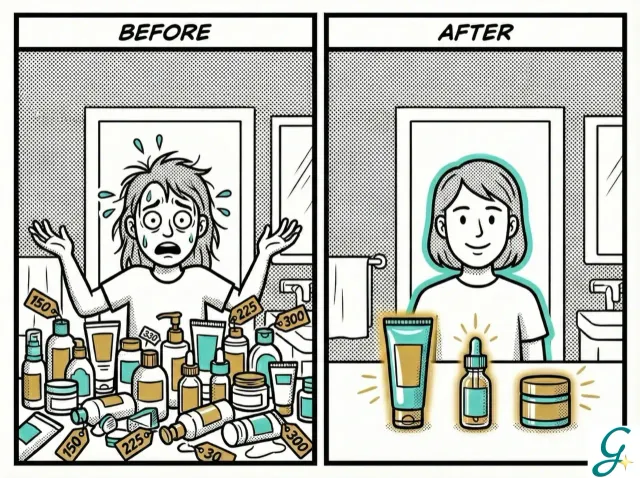
The Core Three: All You Really Need
Every effective skincare routine is built on three products:
1. Cleanser
What it does: Removes dirt, oil, makeup, and environmental pollutants without stripping your skin.
Why it matters: Clean skin absorbs products better and prevents clogged pores.
How to choose:
- Oily skin: Gel or foaming cleanser
- Dry skin: Cream or milk cleanser
- Sensitive skin: Fragrance-free, gentle formula
- All skin: Avoid harsh sulfates (SLS)
How to use:
- Wet face with lukewarm water
- Apply a small amount of cleanser
- Massage gently for 30-60 seconds
- Rinse thoroughly
- Pat dry with a clean towel
2. Moisturizer
What it does: Hydrates skin and strengthens the protective barrier.
Why it matters: Even oily skin needs moisture. A healthy barrier prevents irritation, breakouts, and premature aging.
How to choose:
- Oily skin: Lightweight gel or lotion
- Dry skin: Rich cream with ceramides
- Sensitive skin: Fragrance-free, minimal ingredients
- All skin: Look for hyaluronic acid, glycerin, or ceramides
How to use:
- Apply to slightly damp skin (helps absorption)
- Use upward, gentle motions
- Don't forget your neck
3. Sunscreen
What it does: Protects against UV damage—the #1 cause of premature aging and skin cancer.
Why it matters: 90% of visible skin aging comes from sun exposure. No anti-aging product works without sun protection.
How to choose:
- SPF 30+ broad-spectrum
- Texture you'll actually use daily
- Oily skin: Mattifying formula
- Dry skin: Hydrating formula
- Sensitive skin: Mineral (zinc oxide, titanium dioxide)
How to use:
- Apply as the last step of your morning routine
- Use 1/4 teaspoon for face (more than you think)
- Wait 1-2 minutes before makeup
- Reapply every 2 hours if outdoors
Your First Routine
Morning (3 minutes)
- Cleanse — Or just rinse with water if skin isn't oily
- Moisturize — While skin is still slightly damp
- Sunscreen — Every single day
Evening (3 minutes)
- Cleanse — Remove the day's buildup
- Moisturize — Support overnight repair
That's it. This routine covers the fundamentals of skin health.
Why pH-Balanced Cleansers Matter
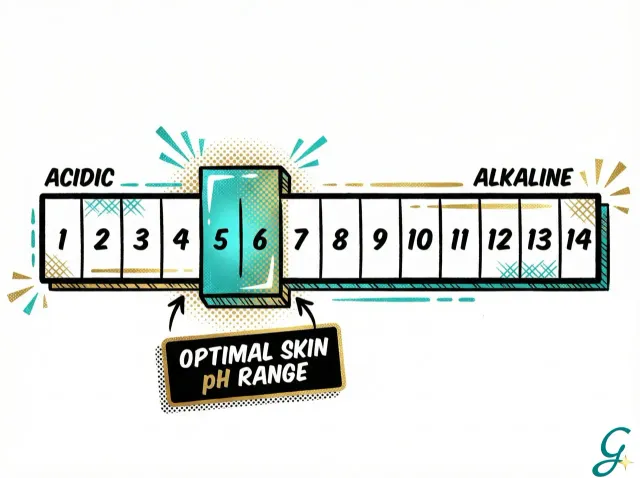
Your skin's natural pH is around 5.5 (slightly acidic). This acid mantle:
- Protects against bacteria
- Maintains moisture
- Keeps skin healthy
Harsh cleansers (especially bar soaps) have high pH that disrupts this balance, leading to:
- Dryness and irritation
- Increased breakouts
- Sensitivity
Look for: Cleansers labeled "pH-balanced" or with pH 5-6.
Sunscreen: The Anti-Aging Essential
If you only do one thing for your skin, wear sunscreen.
The Science
UV radiation causes:
- Wrinkles and fine lines — Breaks down collagen
- Dark spots — Triggers excess melanin
- Skin cancer — DNA damage to skin cells
- Texture changes — Rough, leathery skin over time
Common Excuses (Debunked)
"I don't go outside much" UV rays penetrate windows. You get exposure just driving or sitting near windows.
"I have dark skin" All skin tones need protection. Darker skin has natural SPF 13-15, but still experiences UV damage.
"It's cloudy" Up to 80% of UV rays penetrate clouds.
"Sunscreen breaks me out" Find a non-comedogenic, lightweight formula. They exist.
When to Add More Products
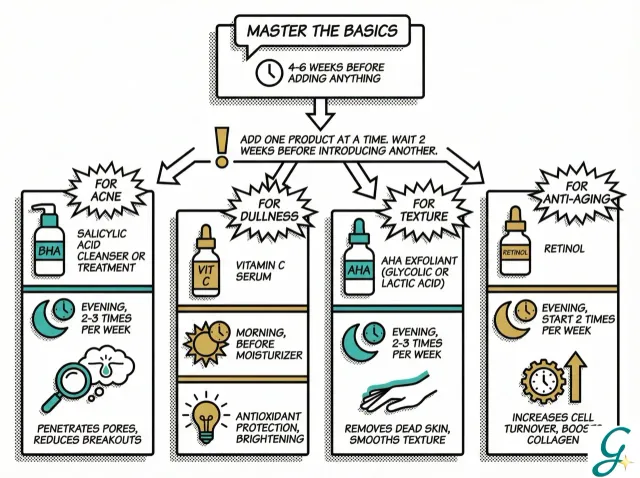
Master the basics for 4-6 weeks before adding anything. Then, based on your concerns:
For Acne
Add: Salicylic acid (BHA) cleanser or treatment When: Evening, 2-3 times per week Why: Penetrates pores, reduces breakouts
For Dullness
Add: Vitamin C serum When: Morning, before moisturizer Why: Antioxidant protection, brightening
For Texture
Add: AHA exfoliant (glycolic or lactic acid) When: Evening, 2-3 times per week Why: Removes dead skin, smooths texture
For Anti-Aging
Add: Retinol When: Evening, start 2 times per week Why: Increases cell turnover, boosts collagen
Important: Add one new product at a time. Wait 2 weeks before introducing another.
Common Beginner Mistakes
1. Starting with Too Many Products
Your skin needs time to adjust. Start with three products, not ten.
2. Expecting Overnight Results
Skincare takes time:
- Hydration: 1-2 weeks
- Acne improvement: 6-8 weeks
- Pigmentation: 2-3 months
- Anti-aging: 3-6 months
3. Skipping Sunscreen
The biggest mistake. All other efforts are undermined without sun protection.
4. Using Hot Water
Hot water strips natural oils. Use lukewarm water.
5. Over-Cleansing
Twice daily is enough. More than that damages your skin barrier.
6. Rubbing Skin Dry
Pat gently with a clean towel. Rubbing causes irritation.
7. Touching Your Face
Your hands transfer bacteria and oil. Keep them away from your face.
Understanding Your Skin Type
Oily Skin
- Shiny, especially T-zone
- Enlarged pores
- Prone to breakouts
Focus on: Lightweight products, oil control
Dry Skin
- Feels tight or rough
- May have flaky patches
- Rarely gets shiny
Focus on: Rich moisturizers, gentle cleansers
Combination Skin
- Oily T-zone
- Normal to dry cheeks
- Most common type
Focus on: Balanced products, zone-specific treatment
Sensitive Skin
- Reacts easily
- Prone to redness
- Stinging or burning with products
Focus on: Fragrance-free, minimal ingredients
Normal Skin
- Balanced
- Few issues
- Lucky you
Focus on: Maintenance and prevention
Building the Habit
The best routine is the one you actually do. Tips for consistency:
Keep Products Visible
Out of sight, out of mind. Keep your products on the counter.
Attach to Existing Habits
"After I brush my teeth, I do skincare."
Start Simple
Three products. Two minutes. Twice a day.
Set Reminders
Until it becomes automatic, use phone reminders.
Track Your Progress
Seeing your consistency (and results) keeps you motivated.
Frequently Asked Questions
What is the best skincare routine for beginners?
Start with three products: gentle cleanser, moisturizer, and sunscreen (morning). At night: cleanser and moisturizer. This covers the essentials. Master these for 4-6 weeks before adding any treatments. Consistency with basics beats an elaborate routine you don't follow.
What order do skincare products go in?
Apply thinnest to thickest: cleanser → toner (optional) → serum → eye cream → moisturizer → sunscreen (AM only). At night, skip sunscreen. Water-based products before oil-based. Treatments go after cleansing, before moisturizer.
How do I know what skincare I need?
Identify your skin type (oily, dry, combination, sensitive) and main concern (acne, aging, dullness, etc.). Everyone needs cleanser, moisturizer, and SPF. Add one targeted treatment based on your primary concern after mastering the basics.
Is a 3-step skincare routine enough?
Yes, for most people. Cleanser + moisturizer + sunscreen covers the fundamentals. Many dermatologists recommend simple routines. You can achieve healthy skin with just these three products used consistently. Add treatments only if you have specific concerns.
How long until I see results from skincare?
Hydration improvement: 1-2 weeks. Texture and tone: 4-6 weeks. Acne improvement: 6-8 weeks. Anti-aging: 2-3 months. Significant transformation: 6+ months. Skin cell turnover takes about 28 days, so patience is essential.
What skincare mistakes should beginners avoid?
Common mistakes: using too many products, not wearing sunscreen, over-cleansing, expecting overnight results, using harsh products, and changing products too frequently. Start simple, be patient, and give products 4-6 weeks before judging effectiveness.
Track Your Skincare Journey with Glimmer
Glimmer helps beginners build lasting skincare habits:
- Simple routine setup — Start with the basics
- Daily reminders — Never forget your routine
- Progress tracking — See your consistency grow
- Photo journal — Document your skin's improvement
The hardest part is starting. Glimmer makes it easy.
Sources
- Draelos, Z. D. (2018). "The science behind skin care: Cleansers." Journal of Cosmetic Dermatology, 17(1), 8-14.
- Rawlings, A. V., & Harding, C. R. (2004). "Moisturization and skin barrier function." Dermatologic Therapy, 17(s1), 43-48.
- Lim, H. W., et al. (2017). "Sunscreen FAQ: A review of the 2016 Food and Drug Administration proposed rulemaking on sunscreen drug products." Journal of the American Academy of Dermatology, 76(5), 958-964.